
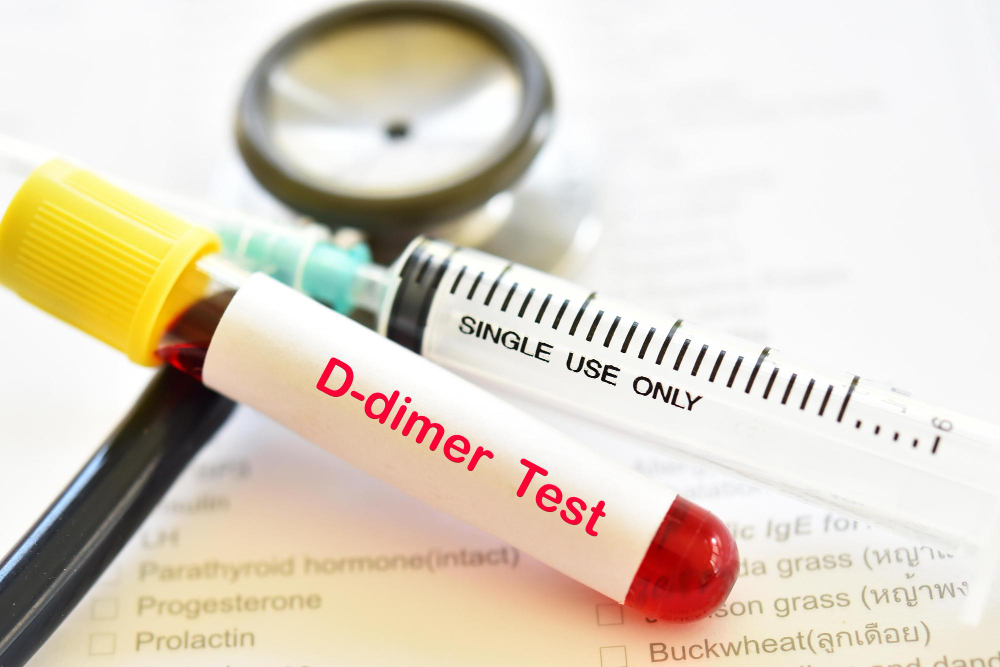
What is the D-Dimer Test?
The D-Dimer test is a simple blood test. It helps doctors check for blood clotting problems. When your body forms a blood clot, it also breaks it down. During this process, a substance called D-Dimer is released into your blood. If your D-Dimer levels are high, it may mean you have a clotting disorder. Many people search for a “D-Dimer test near me” when they need quick results. This test is important for finding serious health issues early.
Why is the D-Dimer Test Done?
Doctors use the D-Dimer test to check for blood clots. For example, it helps diagnose conditions like deep vein thrombosis (DVT) or pulmonary embolism (PE). Sometimes, it is used to rule out clotting disorders. If your doctor suspects a clot, this test can help guide the next steps. In addition, it is often used in emergency rooms to quickly check for dangerous clots.
Symptoms and Conditions That May Require a D-Dimer Test
Several symptoms may lead your doctor to order a D-Dimer blood test. These include:
Doctors may also use this test if you have risk factors for clotting disorders. For instance, pregnancy, cancer, or certain infections can increase your risk.
How is the D-Dimer Test Performed?
The D-Dimer test procedure is quick and simple. First, a healthcare worker cleans your arm. Next, they use a small needle to take a blood sample. The sample goes to a lab for testing. Usually, you do not need to prepare in advance. However, always follow your doctor’s instructions. Results are often ready within a few hours or by the next day.
Understanding Your D-Dimer Test Results
After the test, your doctor will review your D-Dimer levels. The normal range can vary by lab, but low or normal levels often mean you do not have a serious clot. On the other hand, high D-Dimer levels may suggest a clotting disorder. However, other conditions like infection or recent surgery can also raise your D-Dimer. Your doctor will explain what your results mean for you.
Risks and Limitations of the D-Dimer Test
Although the D-Dimer test is safe, it has some limits. For example, it cannot show where a clot is located. Also, many things besides clots can cause high D-Dimer levels. These include pregnancy, liver disease, or recent injury. Because of this, doctors may order more tests if your D-Dimer is high. Still, the test is helpful for ruling out clotting disorders quickly.
When to Consult a Doctor
If you have symptoms like swelling, chest pain, or trouble breathing, seek medical help right away. Early testing can save lives. Even if your symptoms seem mild, it is better to be safe. Your doctor can decide if a D-Dimer test or other tests are needed. Remember, only a healthcare professional can give you the right advice for your situation.
For more information about the D-Dimer test or clotting disorders diagnosis, consult at New Tech Solutions India limited for personalized advice.